
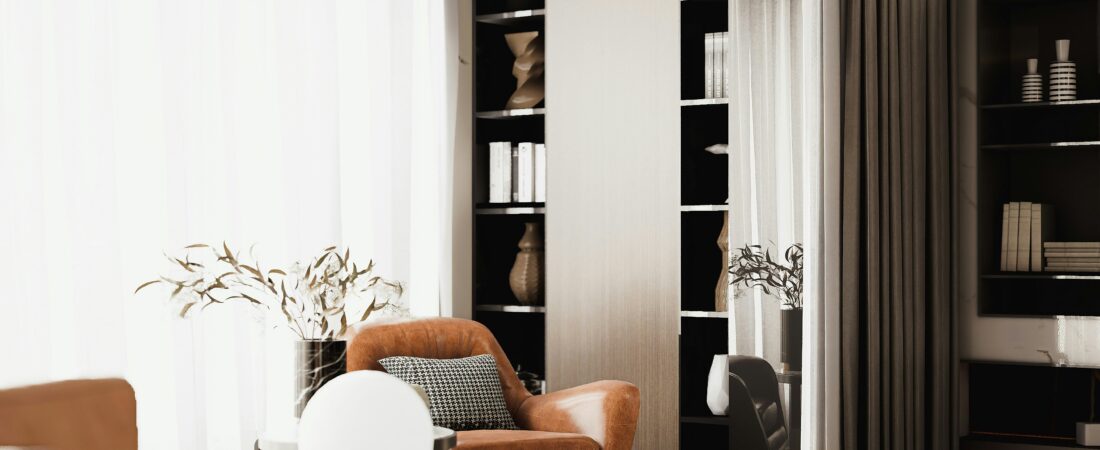
One of the main goals when preparing a home for sale is making each room feel as spacious, functional and inviting as possible.
The good news?
Making a home feel larger doesn’t necessarily require renovations.
After more than 13 years in home staging and design, I’ve seen how a few surprisingly small decisions can completely change the way buyers perceive a room.
Here are seven mistakes I see…and what I would do instead.
1. Using Furniture That’s Too Large
Scale matters.
A huge sectional, oversized coffee table and two large accent chairs might technically fit in a living room, but that doesn’t mean they should all be there.
When furniture dominates the room, buyers notice the furniture instead of the space.
Try this instead: Remove one piece or replace oversized furniture with something appropriately scaled.
You want buyers thinking, “This living room is huge,” not “That sofa is huge.”
2. Blocking Natural Light
Natural light is your friend when selling.
Heavy curtains, furniture in front of windows and dark window coverings can make a room feel dramatically smaller.
Try this instead: Open the curtains, raise the blinds and remove anything unnecessarily blocking the windows.
Let that light in.
3. Too Much Furniture
Sometimes the problem isn’t the size of the furniture.
There’s simply too much of it.
You don’t need to demonstrate every possible function a room could have.
Give the furniture room to breathe.
4. Pushing Everything Against the Walls
It seems logical:
Push everything against the wall = more floor space.
But visually, it can sometimes have the opposite effect.
Pulling pieces slightly inward and creating a defined furniture grouping can actually make a room feel more intentional and spacious.
5. Too Many Small Accessories
Lots of little décor pieces create visual noise.
When your eye doesn’t have anywhere to rest, a room can start feeling cluttered, even when it’s technically clean.
Try this: Use fewer, larger accessories rather than lots of tiny ones.
Think intentional rather than empty.
6. Choosing the Wrong Rug Size
A rug that’s too small can visually shrink your seating area.
Whenever possible, choose a rug large enough to properly anchor the furniture grouping.
This creates one cohesive zone rather than a collection of disconnected pieces.
7. Ignoring Traffic Flow
This is something people don’t always think about.
Can you walk naturally from the doorway to the sofa?
Are you squeezing around a chair?
Do you have to walk around the coffee table to get through the room?
If moving through the space feels awkward, reconsider the layout.
A room that flows well often feels larger.
My Favourite Trick
When you’ve lived in a home for a long time, you stop noticing certain things.
So take photos of your rooms with your phone.
Then look at the photos instead of the actual room.
Suddenly you’ll notice the oversized chair, crowded countertop or awkward furniture placement you’ve been walking past every day.
It’s one of the simplest ways to start looking at your home through a buyer’s eyes.
— Vee
Life Quest with Vee